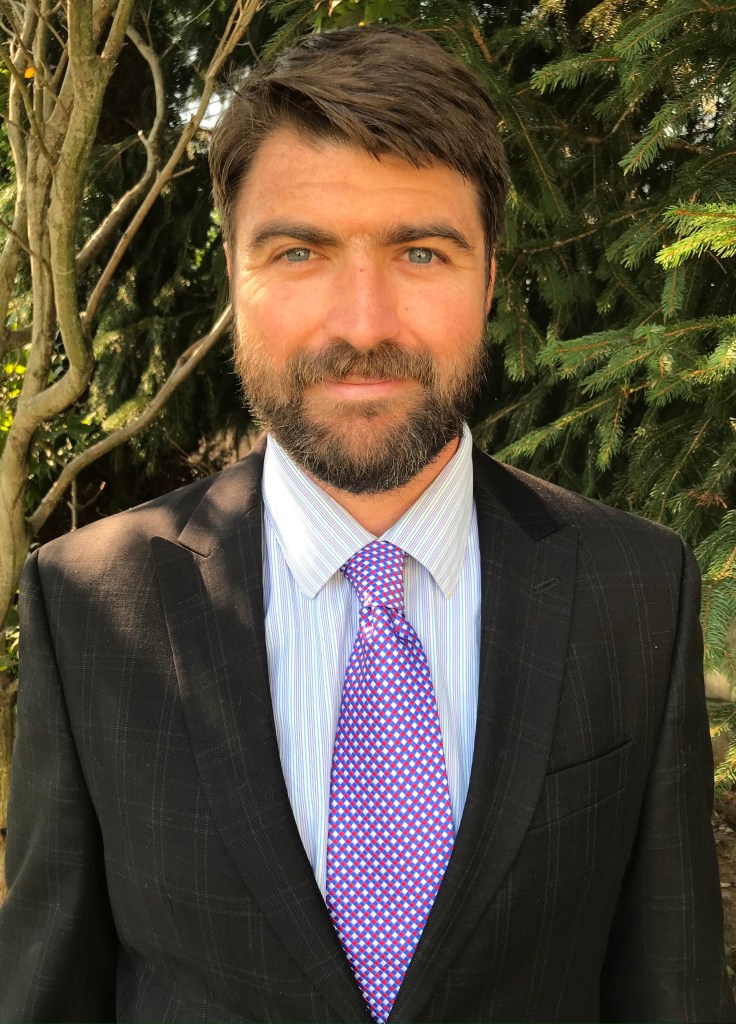
A scholar, teacher, and advocate of American and African American history, Connor Williams shares the stories of our past to help shape the societies of our future. His historical work jointly focuses in History and African American Studies, and he researches, writes and teaches on more than two hundred years of racial conflicts, racial politics and racial identities. In all his endeavors, Williams seeks to articulate and inform the connections between the actions of our past and the possibilities of our present, expanding public understandings of complex national and regional histories.
In 2021 and 2022, Williams served as the Lead Historian for the United States Congress’ “Naming Commission,” researching the history, causes and context of Department of Defense assets that commemorate Confederates or the Confederacy. He directed the Commission’s historical initiatives, collaborated with other historians involved and invested in the Commission’s work, and engaged with both the general public and specific stakeholders. He advised the Commission through historical briefings and assisted in the research and presentation of potential new namesakes to the Naming Commissioners. This work culminated with Williams’ direction in writing, revising, and editing to the Naming Commission’s final reports to Congress.
With work striding the traditions of academia and the exigencies of Washington, Williams experienced how memory, history, bureaucracy, politics, publicity and policy all interplayed in this movement to guide the military away from historical treason and racism and towards a future representative of the ideals for which they fight. More broadly, he had the rare chance to spend more than a year reflecting and writing on the roles that the Civil War and the Confederacy have played, could play—and, perhaps, should play—in our historic memories. While the Naming Commission wrapped at the end of 2022, he continues to serve pro bono as the historian-of-record, giving guidance to defense entities on the Commission’s historical conclusions and recommendations.
A book on the Naming Commission and the new namesakes that it chose, co-authored with Ty Seidule and tentatively titled A Promise Delivered: The Naming Commission, Nine Army Bases, and Ten True American Heroes is under contract with St. Martin’s Press, an imprint of Macmillan. It should be released in 2025. In June 2024, Williams sold his second book, also to St. Martin’s Press. Our Domestic Enemy: The Confederate Insurrection and the Civil War that Saved Our Nation interrogates the causes of the Confederacy, its claims to nationhood, and its consequences for our history. It should be out in 2026.
Honored by this opportunity for national service, Williams took a leave of absence from Yale University, where he works in the departments of History and African American Studies and is in the final stages of completing A Race on the Frontier: African African-American Lives, Labors and Communities in Northern California, 1850-1915. This culminating doctoral work examines the political struggles, economic opportunities, labor strategies, and networks of organization and support African Americans forged throughout the Golden State between the Gold Rush and the Great War. It seeks to understand why, in a state otherwise beset by racial animosity and white supremacy, by 1900 average black Californians controlled thirty-six times as much wealth and had secured far greater civil rights and social autonomy than their counterparts in the deep south.
Prior to his Ph.D at Yale, Williams earned a M.A. at Dartmouth College, where he wrote a thesis on diasporic influences upon Frederick Douglass’ political thinking. Among other fellowships, awards, and prizes he was a finalist for the Louis Pelzer Memorial Award, given to the best article written by a Graduate Student. Connor has taught at Yale University, Middlebury College, Southern Connecticut State University and for the Yale College Writing Center. He has also worked for Yale’s Manuscripts and Archives division and at the Gilder Lehrman Center for the Study of Slavery, Resistance, and Abolition.
He continues to write, speak, and research on American and African American histories throughout America’s Long Nineteenth Century.
 Connor Williams